
Residents of Chhangru and Tinker villages, located in Ward No. 1 of Byas Rural Municipality in Darchula district, have been enduring severe hardships for the past three weeks due to the complete absence of road access and communication services.
Situated at an altitude of approximately 3,200 meters above sea level and within just 10 kilometers of each other, the two villages lie near Nepal’s borders with India and China. However, their remote location and fragile infrastructure have made them particularly vulnerable to natural disasters.
The situation worsened after a landslide triggered by heavy rainfall on August 13 washed away large sections of the only foot trail connecting Chhangru and Tinker. The landslide also disrupted all communication services in the area, leaving the villages completely cut off.
“With the trail destroyed, residents now have no choice but to rely on nearby Indian routes to move between the villages,” said Binod Singh Budhathoki, Secretary of Ward No. 1.
Tinker residents typically migrate to lower altitudes in November or December to escape the severe winter cold. However, with no safe or reliable pathways available, locals are increasingly worried about how they will manage the seasonal migration this year.
“The damaged foot trail has also severely impacted food supply to the villages,” Budhathoki added. “People are surviving on old stockpiles of food. If the situation continues, we are staring at a potential food crisis.”
He further warned that the absence of immediate budget allocations for road repairs could deepen the crisis. “If the trails aren’t restored soon, not just locals but also the security personnel stationed here will face serious problems. In case of medical emergencies, there is simply no way to transport patients to the nearest health facility,” he said.
Residents of Tinker also report being without telephone service for the past three weeks.
“We’ve been forced to use communication equipment from security forces just to send messages to family members,” said resident Astik Tinkari.
Another villager, Birendra Tinkari, explained that while Nepal Telecom services in Chhangru have resumed, Tinker remains entirely without connectivity. “There are 70 households in Tinker. Most of the villagers had migrated to Kuncha during May and June,” he said.
The area is also home to security outposts of the Armed Police Force (BOP) and Nepal Police, based in Chhiyalek.
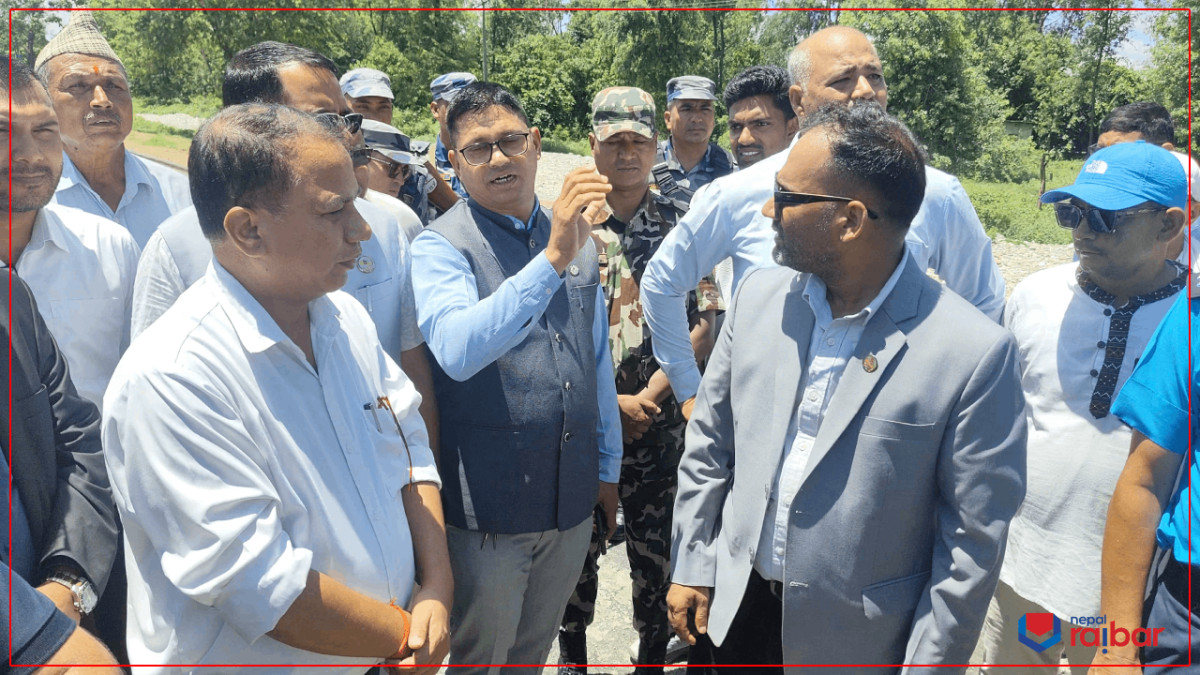
Binod Singh Kunwar, Vice-Chairperson of Ward No. 1, stressed the urgent need for government action.
“A budget must be allocated immediately to restore roads and trails. Food and supplies for both locals and security forces must be transported through routes that lie within Nepal’s territory. It’s essential that a road be built entirely through our own land,” Kunwar said.
He also criticized the government for neglecting local needs. “Border issues are frequently raised in political discussions, but the people living in these strategic areas are consistently left to suffer.”
Tourism activist Himalaya Bhatta echoed similar concerns, highlighting that infrastructure development in Chhangru and Tinker is critical to reinforcing Nepal’s territorial claims in the region.
“Accelerating development from Om Parbat to Limpiyadhura will not only improve local livelihoods but also make Nepal’s presence visible on the ground. That’s how we substantiate ownership,” Bhatta said.
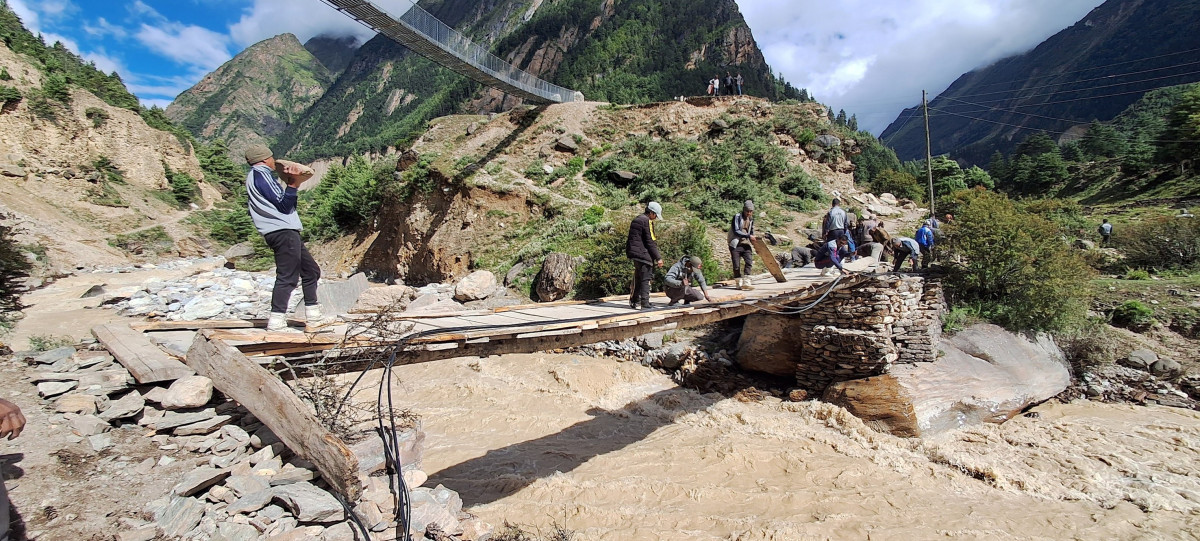
Meanwhile, Ashok Singh Bohora, Chairperson of Ward No. 1, informed that temporary wooden bridges have been constructed over the Nampa and Tinker rivers to enable limited movement between the two villages.
“Some sections of the damaged foot trails have been reopened, but they’re still not suitable for transporting livestock or heavy supplies,” Bohora added.
© 2026 All right reserved to nepalraibar.com
Design & Developed By 
 चर्चित अपडेट
 ताजा
ताजा